
How to Strum a Guitar
Beginner Strumming/Rhythm/Timing

Strumming a rhythm in time takes practice. Most people spend a lot of time learning chords and scales but they neglect to work on rhythm and strumming. If you were sitting around a campfire would you want to hear some lightning fast lead solo all night or a well-played song? It's great to be able to play it all so let's look at some basic strum patterns to get started.
First off I think it's a good idea to practice your strum patterns with a metronome. After you have the pattern under your belt you can stop using the metronome when you practice. Learning to play the guitar is a little technical and playing with a metronome can make your playing sound a little mechanical. Your goal should be to play music with the guitar not just play the guitar.
Should I use a pick or my fingers?
There's no right or wrong when it comes to playing with or without a guitar pick. The choice is a personal preference and depends on the style of music you want to play or the sound you are looking for. For example, a Flamenco guitarist would not use a pick. Also some fingerstyle guitar players that switch from fingerstyle to strumming in the same song usually will not use a pick. A pick will give you a brighter sound with more volume. If you are going to use a pick you should check out the lesson on how to hold a pick.
Pretend Pick Strumming
In this first technique for strumming You put your thumb and index fingers together (or almost together) like you might normally hold a pick. Then on the down stroke use the backside of the index finger nail, then on the upstroke use the back side of the thumb nail.
The Thumb Strum
Strumming with just your thumb gives you a softer sound. You will not get the same volume that you would with a pick or your fingernails. You can use the backside of the thumbnail for accents on the up strums. This strum technique is usually only used for a specific sound and not for general strumming.
Pretend Pick Strumming
In this first technique for strumming You put your thumb and index fingers together (or almost together) like you might normally hold a pick. Then on the down stroke use the backside of the index finger nail, then on the upstroke use the back side of the thumb nail.
Strumming with just your thumb gives you a softer sound. You will not get the same volume that you would with a pick or your fingernails. You can use the backside of the thumbnail for accents on the up strums. This strum technique is usually only used for a specific sound and not for general strumming.
Use a Pick
Most players use a pick for strumming. It's good to know how to use a pick and I recommend learning how to play with a pick even if you decide to be a fingerstyle guitar player in the future. check out the lesson on how to hold a pick.
Use a metronome speed of 80 beats and try to play in time to it.
Start off without playing a chord, just deaden the strings and play to the beat.
Then try the strum exercises playing just an Em
When you are sure you have the timing down play the following chord progression.
C G Am F and repeat.
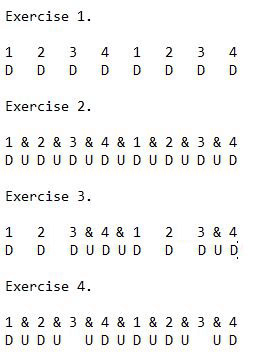
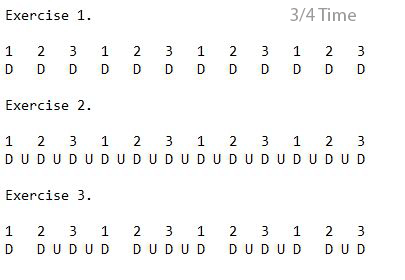
D – Down strum
U – Up strum
Strumming Exercises in 4/4 or 4 beats per measure, change chords every 4 beats and then try every 8 beats.
Strumming Exercises in 3/4 or 3 beats per measure, change chords every 3 beats and then try every 6 beats.
Try to play relaxed with a fluid arm and wrist motion.